If you’ve been wondering, how much protein do I need to build muscle, you’re asking one of the most important questions in fitness and nutrition. Protein plays a critical role in muscle growth, recovery, and overall body composition. Whether your goal is to gain strength, lose fat, or improve performance, understanding the right protein intake can help you see better and faster results.
What Is Protein and Why Is It Important?
Protein is a macronutrient made up of amino acids that help repair and build muscle tissue.
Protein Supports:
- Muscle recovery after workouts
- Muscle growth and repair
- Hormone and enzyme production
- Overall strength and performance
When you strength train, your muscles experience small tears. Protein helps repair these tears, making muscles stronger and larger over time.
How Much Protein Do I Need to Build Muscle?
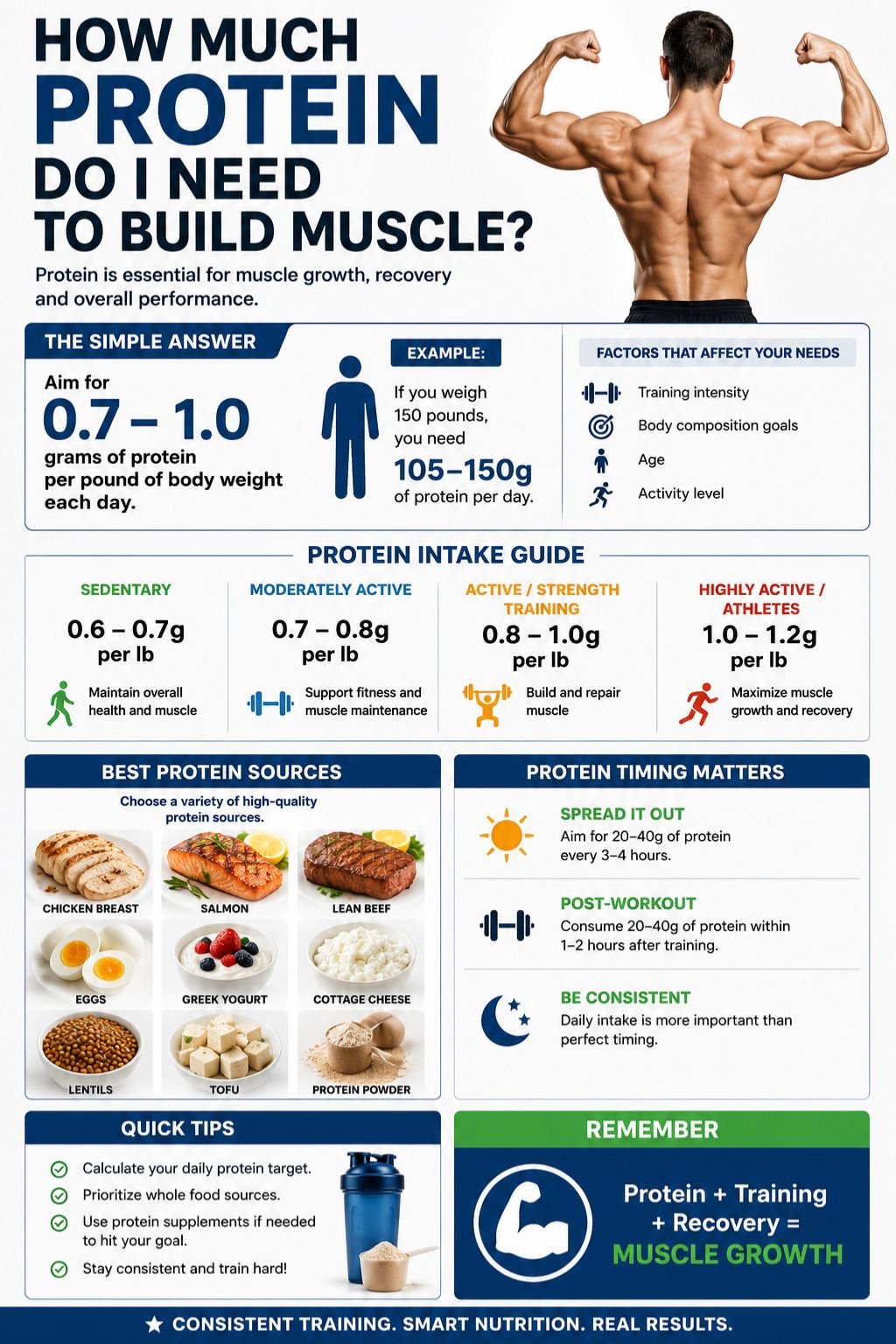
Most active adults aiming to build muscle should consume approximately:
- 0.7 to 1 gram of protein per pound of body weight daily
Example:
- A 150-pound person may need about:
- 105–150 grams of protein per day
The exact amount depends on factors such as:
- Activity level
- Training intensity
- Age
- Body composition goals
People who engage in regular strength training often benefit from the higher end of the range.
Best Sources of Protein for Muscle Building
Animal-Based Protein Sources
These are complete proteins containing all essential amino acids.
Excellent Options:
- Chicken breast
- Lean beef
- Eggs
- Fish
- Greek yogurt
- Cottage cheese
Plant-Based Protein Sources
Plant-based diets can also support muscle growth when planned correctly.
Great Choices:
- Lentils
- Tofu
- Tempeh
- Quinoa
- Chickpeas
- Protein-rich plant powders
When Should You Eat Protein?
Spread Protein Throughout the Day
Instead of eating most of your protein in one meal, distribute it evenly.
Recommended Approach:
- Include protein with every meal and snack
- Aim for 20–40 grams per meal
Post-Workout Nutrition
Eating protein after workouts supports recovery and muscle repair.
Good Post-Workout Choices:
- Protein shakes
- Chicken and rice
- Greek yogurt with fruit
Common Mistakes That Limit Muscle Growth
Not Eating Enough Protein
Insufficient protein intake can slow muscle recovery and growth.
Skipping Meals
Inconsistent eating patterns make it harder to support muscle development.
Ignoring Strength Training
Protein alone won’t build muscle without resistance training.
Overlooking Sleep and Recovery
Recovery is essential for muscle repair and growth.
Practical Tips to Increase Protein Intake
Start Your Day with Protein
Include eggs, Greek yogurt, or a protein smoothie at breakfast.
Add Protein to Snacks
Choose snacks like:
- String cheese
- Protein bars
- Nuts and seeds
- Cottage cheese
Meal Prep in Advance
Planning meals helps you consistently hit protein goals.
Use Protein Supplements Wisely
Protein powder can be convenient but should complement whole foods.
Step-by-Step Guide to Building Muscle with Proper Nutrition
Step 1: Calculate Your Protein Needs
Use your body weight and activity level as a guide.
Step 2: Strength Train Consistently
Focus on progressive overload and compound exercises.
Step 3: Eat Balanced Meals
Combine protein with healthy carbs and fats.
Step 4: Recover Properly
Sleep 7–9 hours per night and allow muscles to recover.
Step 5: Stay Consistent
Muscle growth takes time and long-term effort.
FAQ
Most people need about 0.7–1 gram of protein per pound of body weight each day to support muscle growth.
Yes, whole foods alone can provide enough protein for muscle building.
Not necessarily. Excess protein beyond your needs may not provide additional muscle-building benefits.
Lean meats, eggs, dairy, fish, and high-quality plant proteins are all effective options.
Both can help, but consuming protein after workouts is especially important for recovery and muscle repair.
How Much Protein Do I Need to Build Muscle Fast Today
Understanding how much protein do I need to build muscle is essential for achieving your fitness goals effectively. Protein works hand-in-hand with strength training, recovery, and consistency to help you gain lean muscle and improve overall performance. By focusing on balanced nutrition and sustainable habits, you can support long-term muscle growth and better health.
Ready to Build Muscle with a Personalized Fitness Plan?
At Falls Church Personal Training, we help clients create customized fitness and nutrition plans designed for real, lasting results. Whether your goal is muscle building, fat loss, or improved strength, our expert coaching and personalized support can help you stay motivated and achieve success faster. Take the next step toward a stronger, healthier you today.