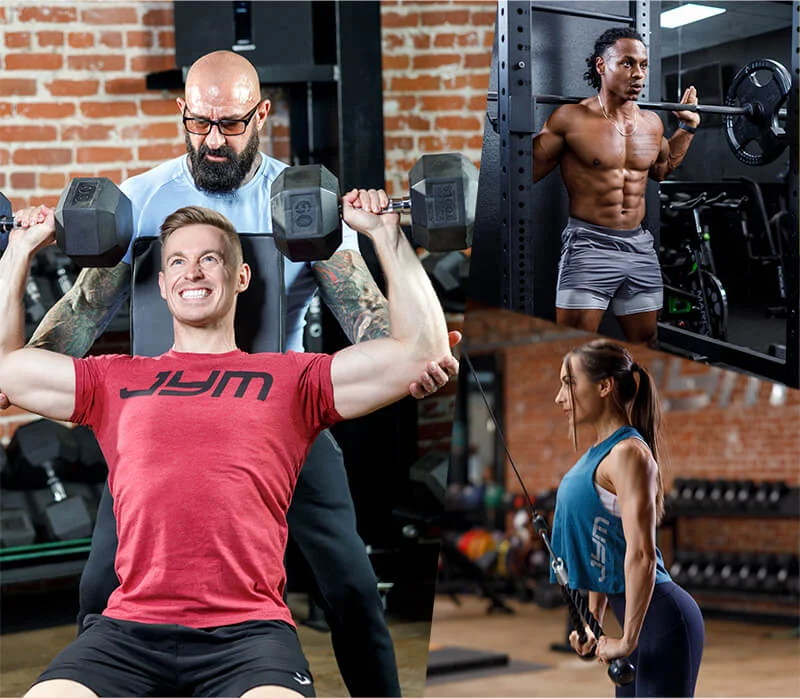
If you are asking, “Can I build muscle while losing fat?”, the short answer is yes, but it works best when your training, food, recovery, and expectations all point in the same direction. This process is often called body recomposition: you are not just trying to make the scale drop, you are trying to improve the ratio of lean muscle to body fat. The most reliable path combines progressive strength training, a controlled calorie deficit, enough protein, and consistent habits you can repeat for months.
Can you build muscle while losing fat?
Yes, you can build muscle while losing fat, especially if you are new to lifting, returning after time away, carrying extra body fat, or finally training and eating with structure. Strength training gives your body a reason to keep or add muscle, while nutrition creates the conditions for fat loss. Mayo Clinic notes that strength training can help reduce body fat, burn calories, and build muscle when done consistently.
The key is understanding that “losing weight” and “losing fat” are not always the same goal. A crash diet may reduce scale weight quickly, but it can also cost muscle, energy, and performance. A smarter fitness transformation focuses on losing fat while protecting the tissue that gives your body shape, strength, and a higher-quality result.
That is why the answer to “can i build muscle while losing fat” depends less on hacks and more on execution. You need to lift with intent, eat enough protein, avoid extreme restriction, and measure progress beyond the scale.
The body recomposition mindset
Trying to build muscle fast while dieting aggressively usually backfires. Muscle gain is an expensive process for the body, and fat loss requires an energy deficit. Recomposition sits in the middle: you create a modest deficit, train hard enough to stimulate muscle, and recover well enough to adapt.
This is also why progress can look slower at first. If you lose fat and gain muscle at the same time, the scale may barely move for a few weeks. Your waist may shrink, your lifts may improve, your posture may change, and your clothes may fit better even when your body weight looks “stuck.”
For most people, the goal should not be the fastest possible drop in weight. It should be the best possible change in body composition. That means you are looking for signs like better workout performance, more muscle definition, improved measurements, and steady energy.
Strength training drives the muscle-building signal
Strength training is the foundation of recomposition because it tells your body that muscle is useful. Without that signal, a calorie deficit can encourage your body to shed both fat and lean mass. With resistance training, you give your body a reason to preserve and build muscle while fat is used for energy.
Mayo Clinic recommends strength training all major muscle groups at least twice per week for health and fitness benefits. For body recomposition, many people do well with three to four sessions per week, as long as they can recover and progress.
A balanced weekly plan should include:
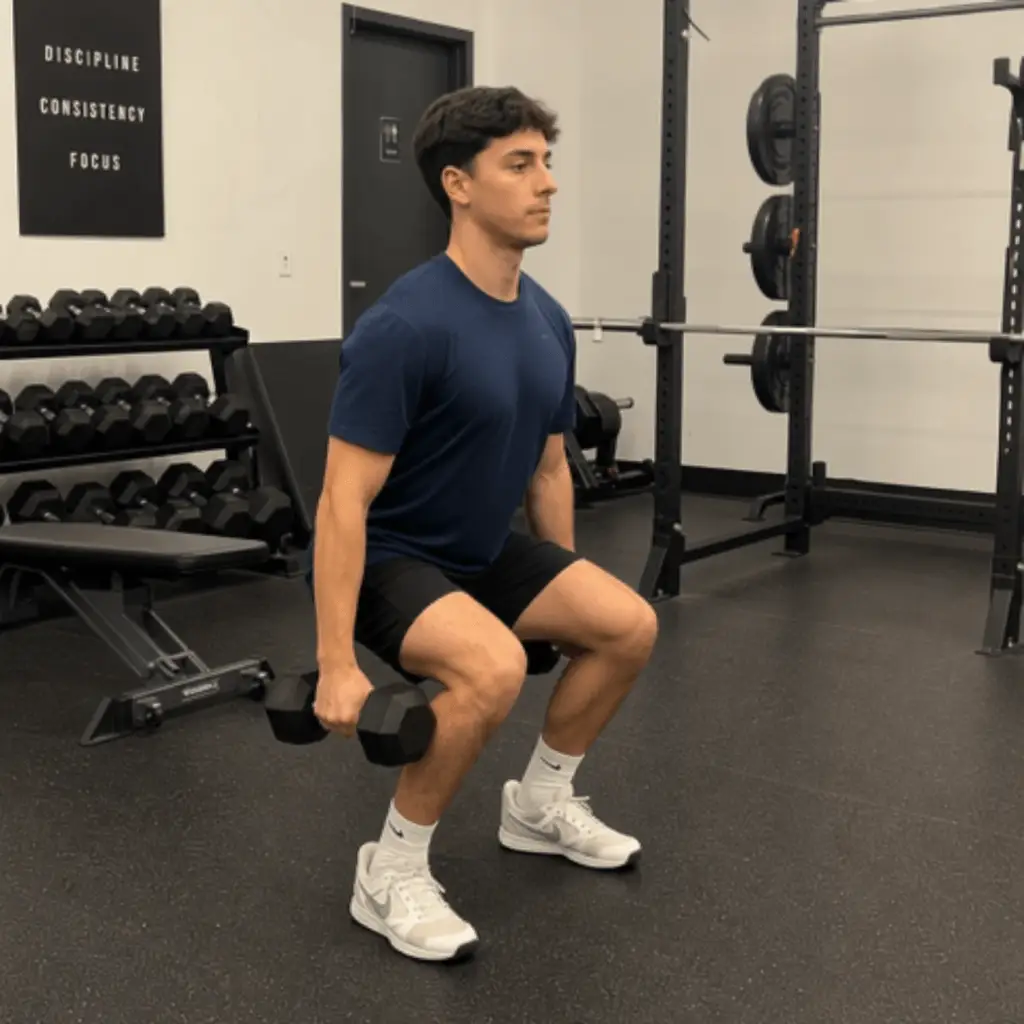
Squat or lunge pattern: squats, split squats, step-ups, leg press
Hip hinge: Romanian deadlifts, hip thrusts, deadlifts, kettlebell swings
Upper-body push: push-ups, bench press, overhead press
Upper-body pull: rows, pull-ups, lat pulldowns, face pulls
Core stability: planks, dead bugs, carries, anti-rotation presses
The goal is not to destroy yourself every session. The goal is progressive overload: gradually doing more work over time through added reps, better form, more weight, slower tempo, or extra sets. If your workouts never become more challenging, your body has little reason to add muscle.
How to build muscle while losing fat without overcomplicating it
To build muscle while losing fat, follow a simple structure: lift consistently, eat a high-protein muscle building diet, keep your calorie deficit moderate, sleep enough, and use cardio as support rather than punishment. This approach is not flashy, but it is repeatable, and repeatable is what changes bodies.
Here is a practical starting framework:
Train with weights 3–4 days per week. Focus on compound lifts and track your sets, reps, and weights.
Eat protein at each meal. The International Society of Sports Nutrition states that many exercising people can support muscle gain or maintenance with about 1.4–2.0 grams of protein per kilogram of body weight per day.
Use a modest calorie deficit. Avoid slashing food so low that training quality, mood, and sleep suffer.
Keep cardio purposeful. Add steps, intervals, cycling, or incline walking to support fat loss and heart health.
Recover like it matters. Muscle grows between sessions, not during the set itself.
This is the practical answer to how to build muscle while losing fat: do the basics well enough and long enough that your body has no choice but to adapt.
Food choices that support recomposition
A muscle building diet for fat loss should be satisfying, protein-forward, and flexible enough to live with. It does not need to be extreme, and it does not need to remove every food you enjoy. What matters most is the overall pattern: enough protein, mostly nutrient-dense foods, appropriate portions, and consistency.
Build most meals around:
Lean protein: chicken, turkey, fish, eggs, Greek yogurt, tofu, tempeh, lean beef, protein powder if useful
High-fiber carbohydrates: oats, potatoes, rice, beans, fruit, whole grains
Colorful vegetables: leafy greens, peppers, carrots, broccoli, zucchini, salads
Healthy fats: olive oil, avocado, nuts, seeds, fatty fish
Fluids and electrolytes: especially if you train hard or sweat heavily
Protein is especially important because it supports muscle protein balance and helps meals feel more filling. But carbohydrates are not the enemy. They fuel hard training, help you perform more reps, and make fat burning workouts feel less miserable.
A simple plate method works well: fill one-quarter to one-third of the plate with protein, one-quarter with carbohydrates, the rest with vegetables or fruit, and add a small amount of fat. Adjust portions based on progress, hunger, and performance.
Fat burning workouts work best with a strength base
Fat burning workouts can help create a calorie deficit, improve conditioning, and make your plan more enjoyable. However, cardio alone is usually not the best route if your goal is to look stronger and more defined. Mayo Clinic Health System notes that strength training builds lean body mass and can improve weight-loss results and appearance.
A good weekly setup might look like this:
Monday: Full-body strength training
Tuesday: Brisk walk or low-intensity cardio
Wednesday: Upper/lower strength session
Thursday: Rest or mobility
Friday: Full-body strength training
Saturday: Intervals, cycling, hiking, or sport
Sunday: Rest, steps, stretching
You do not need to make every session high intensity. In fact, too much intense cardio can interfere with recovery if you are already lifting hard and eating in a deficit. Use cardio to support your plan, not to compensate for food or punish your body.
Progress signs that matter more than the scale
The scale is useful, but it is incomplete. If you are trying to build muscle while losing fat, your weight may change slowly because muscle gain can offset fat loss. That does not mean nothing is happening.
Track these markers instead:
Waist, hip, chest, arm, and thigh measurements every 2–4 weeks
Progress photos in the same lighting and clothing
Gym performance on key lifts
Resting energy, hunger, sleep, and mood
How your clothes fit
Body weight trends across several weeks, not one day
If your waist is shrinking, strength is stable or rising, and photos look leaner, you are likely moving in the right direction even if the scale is stubborn.
Common mistakes that slow results
Many people fail at recomposition because they mix the wrong extremes. They diet too hard, train too randomly, change programs every week, or expect visible abs after two weekends of effort. The solution is not more chaos; it is better consistency.
Avoid these traps:
Cutting calories too low: This can reduce training performance and make muscle gain harder.
Skipping progressive overload: Random workouts burn sweat, but planned training builds strength.
Doing only cardio: Cardio helps, but muscle needs resistance.
Under-eating protein: Low protein makes it harder to preserve or build lean mass.
Ignoring sleep: Poor recovery limits performance, hunger control, and adaptation.
Chasing soreness: Soreness is not the same as progress.
If you have a medical condition, injury, history of disordered eating, or major weight-loss goal, it is wise to work with a qualified health or fitness professional before making big changes.
Why choose us
Choose this approach because it prioritizes sustainable body recomposition over short-term scale obsession. Instead of promising that you can build muscle fast with a miracle routine, it gives you a clear system: lift progressively, eat enough protein, manage calories, recover properly, and track the right data.
This matters because the best plan is not the harshest plan. It is the plan you can repeat through busy weeks, imperfect meals, travel, low motivation, and normal life. A realistic fitness transformation should make you stronger, more capable, and more confident—not burned out and confused.
FAQ
Can I build muscle while losing fat if I am a beginner?
Yes. Beginners often respond well because their bodies are highly sensitive to strength training. If you lift consistently, eat enough protein, and avoid extreme dieting, you may see strength gains and fat loss at the same time.
Can you build muscle while losing fat without supplements?
Yes. Supplements are optional. Food quality, total protein, training consistency, sleep, and calorie control matter far more than powders or pills.
How fast will I see results?
Most people need several weeks to notice meaningful changes and several months for a clear transformation. Early progress may show up as better strength, improved energy, and looser clothing before dramatic visual changes.
Should I bulk or cut instead?
If you are already lean and experienced, separate muscle-gain and fat-loss phases may work better. If you are newer, returning to training, or have body fat to lose, recomposition is often a smart starting point.
Achieve Body Recomposition: Build Muscle and Burn Fat Simultaneously
Yes, you can build lean muscle while shedding body fat—a process known as body recomposition. Achieving both at once requires the right balance of targeted resistance training, precise protein intake, and a tailored energy balance so your body burns fat for fuel while building new muscle. You don’t have to guess your way through complex nutrition macros or generic fitness routines to make it happen. Contact us today to connect with our fitness and nutrition experts, and let’s create a personalized body recomposition plan engineered specifically for your physique goals.